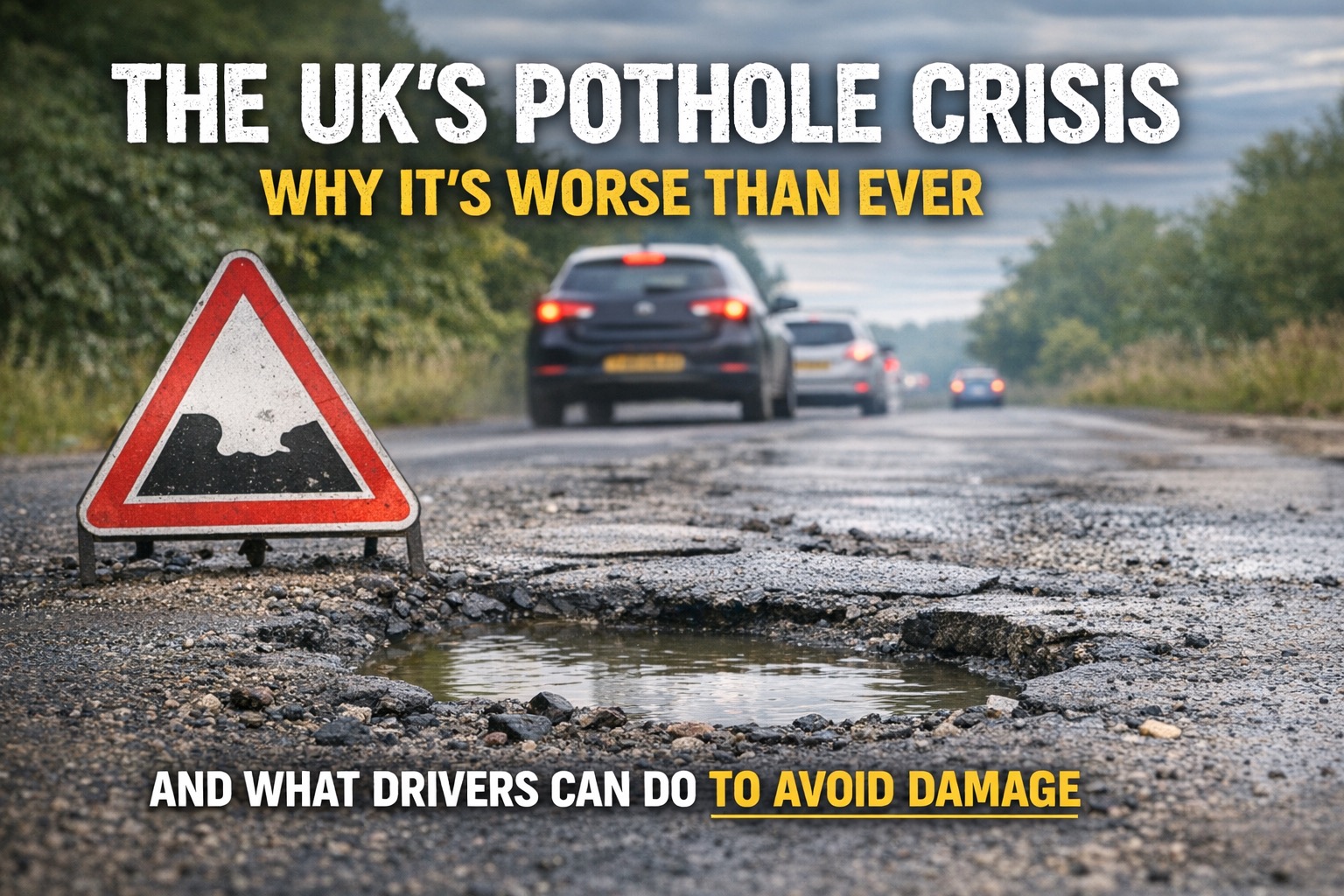
Why the UK Pothole Crisis Feels Worse Than Ever and What Drivers Can Do About It
Anyone who drives in the UK today knows the roads are in a poor state. Potholes are no longer an occasional inconvenience. They are a daily hazard that can damage tyres, wheels and suspension in a single moment. For learners, the situation can feel intimidating. For experienced drivers, it is simply exhausting.
Understanding why the roads have deteriorated and how to spot danger early is now essential for safe driving.
What Causes Potholes
Potholes form when water enters cracks in the road surface. When the temperature drops, the water freezes and expands. This forces the surface apart. Traffic then breaks the weakened area down further until a pothole forms. Once it appears, it grows quickly.
The freeze and thaw cycle is normal in the UK. The real problem is that many roads are already worn out before winter even begins.
Why the Roads Are So Bad Right Now
The current crisis is the result of long term pressures.
Long term underfunding
Councils often have enough money to patch holes but not enough to resurface roads properly. Patching is temporary and fails sooner, which leads to more potholes.
Heavier vehicles
Modern cars, especially electric vehicles, are heavier than older models. Heavier vehicles place more stress on already weakened surfaces.
More extreme weather
The UK now experiences longer periods of heavy rain followed by sudden cold snaps. This accelerates pothole formation.
Ageing road surfaces
Many roads have exceeded their intended lifespan. Repeated patching has left them fragile and prone to rapid failure.
Reactive repairs
Because budgets are tight, councils focus on emergency repairs rather than long term resurfacing. This creates a cycle that is difficult to break.
Why It Feels Worse Recently
Drivers have noticed a sharp decline in road quality over the last few years. This is due to a combination of wet winters, rising repair costs, increased traffic and a growing backlog of maintenance work.
The Most Important Defensive Driving Habit: Leave a Safe Space in Front
If there is one habit that protects drivers from pothole damage more than any other, it is maintaining a generous following distance.
A safe gap is not just about stopping distance. It is about visibility and time.
When you follow too closely, you cannot see the road surface ahead. You only see the back of the vehicle in front. If that vehicle drives over a pothole, you will not see it until the last moment. By then, you have no time to steer around it safely.
A proper gap gives you:
More time to spot surface defects More time to adjust your speed More space to steer smoothly More opportunity to avoid damage
Learners often underestimate this. They focus on the car in front rather than the road beyond it. Teaching learners to look through the vehicle ahead, and to leave enough space to see the surface clearly, is one of the most effective ways to reduce risk.
Experienced drivers benefit from the same habit. A larger gap is not a sign of hesitation. It is a sign of awareness and control.
How Road Surface Colour Helps You Spot Hazards
One of the most useful but least discussed skills is learning to read the colour and texture of the road surface.
Different colours often indicate different levels of grip, age or damage.
Darker patches usually mean recent repairs or areas where water collects. Lighter grey areas often indicate older, worn surfaces that are more likely to break down. Shiny or reflective patches can indicate standing water or polished, slippery tarmac. Rough or uneven colour patterns can signal crumbling edges or early stage potholes.
When you train your eyes to notice these differences, you begin to spot hazards long before they become obvious. This is especially important on rural roads where shadows, hedges and tree cover can hide defects.
Learners benefit enormously from being taught to read the road surface in this way. It builds anticipation and reduces the chance of sudden reactions.
What Drivers Can Do to Reduce the Risk of Damage
Look well ahead and scan for changes in colour and texture Leave a large, comfortable gap from the vehicle in front Slow down on unfamiliar or poorly lit roads Avoid harsh steering movements Keep tyres correctly inflated Report potholes to your local council
What Learner Drivers Should Know
Learners should practise:
Looking far ahead rather than at the bonnet Using commentary driving to identify hazards early Maintaining a safe following distance at all times Reading road surface colour and texture Slowing down early when visibility is limited
These habits are not just about passing a test. They are about protecting themselves and their vehicle in real world conditions.
The Bigger Picture
The UK pothole crisis will not be solved quickly. It requires long term investment and a shift from patching to proper resurfacing. Until then, drivers must rely on good observation, good planning and good space management.
Understanding why the roads are in this condition helps drivers make sense of what they face every day. It also reinforces the importance of leaving space, reading the road surface and driving with anticipation.